Plastic Degradation Time - Centuries or Millennia? PART 2
Fecha: 18/07/2025
Calculating the exact time, it takes for a plastic object to degrade completely is complex and varies depending on the type of polymer, the size of the object, the environmental conditions (UV light, temperature, oxygen, salinity, presence of microorganisms) and the additives used. However, the available estimates are clear: we are talking about geological time scales for most common plastics.
Factors Influencing Degradation Rate:
Polymer Type: As mentioned, PE and PP are extremely resistant, while PS and PET can degrade slightly faster under certain conditions, but still over very long-term scales.
Object Shape and Size: A bulky, dense object will take longer to degrade than a thin film, since the surface area exposed to the degrading agents is smaller in proportion to its volume.
UV exposure: It is the most crucial factor for first fragmentation. A plastic buried or submerged in deep water without sunlight will degrade much more slowly.
Temperature: Higher temperatures accelerate chemical reactions, including degradation, but ambient temperatures are rarely high enough for rapid degradation.
Oxygen: Oxidative degradation requires oxygen. In anoxic (oxygen-depleted) environments, such as the bottom of oceans or deep landfills, degradation is virtually non-existent.
Humidity and Salinity: Water can ease hydrolysis in some plastics, but its effect is limited in others. Seawater salinity can influence buoyancy and the rate of biofouling (colonization by organisms).
Microbial Activity: La presencia de microorganismos con potencial de degradación puede influir, aunque su impacto es mínimo para la mayoría de los plásticos convencionales.
Common Estimates (with caveats): Es importante señalar que estas son estimaciones basadas en estudios a menudo acelerados o extrapolaciones, y la "degradación" a menudo se refiere a la fragmentación, no a la mineralización completa (descomposición en CO2, agua y biomasa).
Plastic Bags (PE): 10-20 years (for visible fragmentation but will persist as microplastics for much longer).
Plastic Cups and Containers (PS, PP): 50-80 years (for fragmentation).
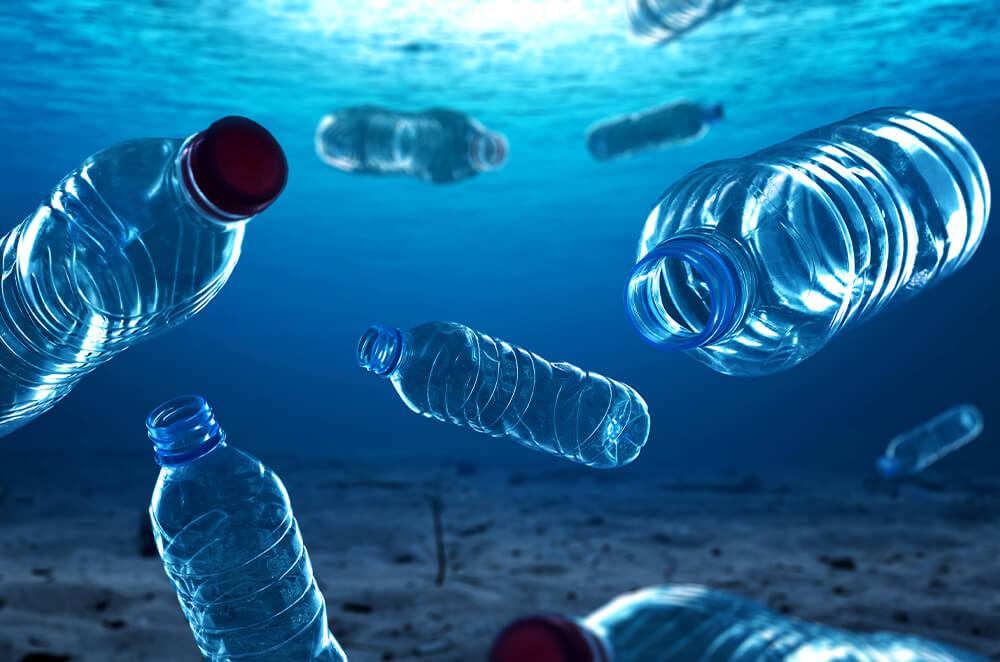
Plastic Bottles (PET): 450 years or more. PET is resistant to degradation in the environment.
Disposable diapers: 450-500 years.
Plastic Rings (six-pack): 400 years.
Nylon fishing line: 600 years.
Fishing Buoy (PS): More than eight hundred years.
Credit Cards (PVC): Never fully degrade, fragment into microplastics.
Baby Bottles (PC): Never fully degrade, fragment into microplastics.
Key Considerations
Not Disappearance: Most of these figures refer to the time it takes for the object to fragment and lose its original shape. The resulting particles (micro and nanoplastics) persist for an indeterminate time, potentially thousands of years.
Ideal vs. Actual Conditions: Estimates are often based on ideal conditions (e.g., continuous exposure to sunlight and oxygen). At the bottom of the ocean or buried in a landfill, where conditions are anoxic and without sunlight, degradation is almost non-existent.
“Forever” on Humanscale: From a human perspective, if an object takes 450 years to fragment, and the resulting particles persist for millennia, we are talking about a material that is, in practice, “forever” in the environment. The plastic we discard today, in many of its forms, will be here for tens of generations to come, and its microscopic by-products, for thousands more.
This analysis of degradation times underscores the size of the challenge. The accumulation of plastic in the environment is not a problem that will solve itself; it is a legacy that we are building with every piece of plastic that enters nature.
El Impacto de Largo Plazo – Un Legado para las Generaciones Futuras
La persistencia de los plásticos no es solo una curiosidad científica; tiene profundas implicaciones ecológicas, económicas y sociales que resonarán por siglos.
Impacto Ecológico Generalizado
Terrestrial Ecosystem Contamination: Plastics is not only a marine problem. They accumulate in agricultural soil, forests, and deserts. They affect soil structure, alter water holding ability, negatively affect soil microorganisms and can inhibit plant growth. Terrestrial animals also ingest plastic, suffer entanglement and habitat alteration.
Contamination of Aquatic Ecosystems (Freshwater and Marine)
Entanglement and Asphyxiation: Plastic macro-trash (bags, fishing nets, packaging) entangle and suffocate thousands of marine and freshwater species, from turtles and birds to marine mammals and fish. Ghost fishing nets continue to fish and kill for decades.
Ingestion: Plastic ingestion causes intestinal blockages, perforations, starvation (due to false satiety) and toxicity due to chemical additives and adsorbed contaminants. This affects not only megafauna, but also invertebrates and planktonic organisms, affecting the base of the food chain.
Alteration of Coastal Ecosystems: Plastics accumulate on beaches, dunes, and mangroves, altering the landscape, flora and fauna that depend on these habitats.
Colonization by Invasive Species: Floating plastic debris can function as “rafts” for transporting invasive species to new areas, altering local biodiversity and ecosystems. This is known as “rafting” or “plastic colonization”.
Micro and Nanoplastics at All Levels: As discussed, the ubiquity of these particles in water, air, soil, and food means that no corner of the planet or trophic level is exempt from their influence.
Economic Impact
Losses in Fisheries and Aquaculture: Damage to marine ecosystems, fish kills and contamination of shellfish by microplastics directly affect fishing productivity and aquaculture, with significant economic losses for the communities that depend on them.
Tourism: Plastic-contaminated beaches reduce the attractiveness of tourism, negatively impacting local economies that depend on this industry.
Cleaning and Waste Management: The costs associated with cleaning up beaches, oceans, and landfills, as well as managing and recycling plastics, are enormous and growing exponentially. Many municipalities and countries devote significant resources to combat this problem.
Damage to Infrastructure: Plastics can clog drainage systems, water pumps and other infrastructure, causing damage and requiring costly repairs.
Impact on Human Health and Social Perception
Continuous Exposure: The presence of microplastics in our food, water and air exposes us to these materials on an ongoing basis. Although research on the long-term effects on human health is still developing, concern is growing.
Psychological Impact: Growing awareness of plastic pollution can generate eco-anxiety and a sense of helplessness in the face of such a problem.
Cargo for Future Generations: The plastic legacy we are leaving behind is not only an environmental burden, but also an economic and health burden for future generations, who will have to deal with managing and mitigating a problem we created.
The "plastic legacy" is a long-term mortgage we have signed with the planet. The persistence of these materials means that the decisions we make today about the production, consumption and management of plastics will have repercussions far beyond our own existence.
What Can We Do?
Circular Economy: The fundamental principle is to move from a linear “take-make-dispose” model to a circular model where materials are kept in use for as long as possible. This implies:
Source Reduction: Design products to last longer, be reusable or avoid unnecessary plastic.
Reuse: Promote refill and reuse systems for packaging (bottles, containers), reusable bags, etc.
Repair: Encourage product repair rather than replacement.
Banning and Regulatory Policies: Many governments are implementing bans on single-use plastics (bags, straws, cutlery, expanded polystyrene packaging). Virgin plastic taxes and recycled content targets are also being explored to drive demand for recycled materials.
Design for Sustainability: Manufacturers should design plastic products that are easier to recycle (mono-material, no problematic additives), incorporate recycled material and have a longer shelf life.
Effective Recycling: Increase recycling rates and improve recycling infrastructure.
Mechanical Recycling: Current shredding and melting process. Needs to be more efficient and expanded to more types of plastics.
Chemical Recycling: Breaking down polymers into their monomers or base chemicals to create new, high-quality plastics. This technology is still being developed and scaled up but offers the promise of recycling plastics that are difficult or impossible to recycle mechanically.
Marine Debris Collection: Initiatives such as "The Ocean Cleanup" or coastal cleanup programs are vital to cutting plastic already present in the environment, although they are palliative solutions and do not address the root of the problem.
Container Return Systems (CRS): Schemes that encourage consumers to return empty containers in exchange for a deposit, which significantly increases collection and recycling rates.
Bioplastics: Plastics derived from renewable sources (corn, sugar cane, algae). Not all bioplastics are biodegradable. For example, bio-PET is chemically identical to conventional PET and is not biodegradable.
Biodegradable Plastics: Materials that can be decomposed by microorganisms. However, many biodegrades under industrial composting conditions (hot temperature, controlled humidity, presence of specific microorganisms) and not in the natural environment (oceans, soils). Confusion in labeling can lead to a false sense of security and inappropriate disposal.
Compostable Plastics: Those that degrade completely into an industrial composting plant within a defined period.
It is crucial to research and develop bioplastics that degrade in the natural environment (or at least do not generate persistent microplastics) and to educate the public about the proper disposal of these materials. The challenge is to ensure that they are not a "solution to one problem by creating another."
Manufacturers of plastic products must take greater responsibility for the entire life cycle of their products, from design to end-of-life, including collection and recycling.
The plastic legacy forces us to think deeply about our relationship with materials and the environment. The solutions are not simple, but the path to a more sustainable future with plastic involves a radical change in the way we produce, consume, and discard it.
SOURCES:
Ellen MacArthur Foundation ("The New Plastics Economy")
United Nations Environment Programme (UNEP)