Marine heat waves impact Latin America
Fecha: 13/06/2025
According to a study, marine heat waves in 2023 and 2024 caused extreme temperatures throughout the region, contributed to a record number of storms, and caused massive fish kills in the Gulf of Mexico.
A study published in Nature Climate Change warns that the number of marine heat wave days in 2023 and 2024 was nearly 3.5 times higher than any other year on record. During this period, nearly 10% of the ocean reached record temperatures. Although El Niño worsened this increase, the report stresses that earlier research shows that human-induced climate change already caused a 50% increase in marine heat waves between 2011-2021.
The consequences caused devastating damage around the world. “The number of impacts we've seen from marine heat waves in the last two years has been pretty crazy, with mass coral bleaching, species emergence in new locations and the number of related extreme weather events on land,” laments Kathryn E. Smith of the UK Marine Biological Association, one of the bodies involved in this research.
"We have had mass bleaching events in the oceans, but this one in 2023/2024 was very serious because it did not start the same all over the world. As the seas and oceans began to warm, it began to affect all the coral reefs of the world and this had never been seen before, since these bleaching events associated with rising temperatures were more regional," Valeria Pizarro, a scientist at the Perry Institute for Marine Science, told DW.
According to the report, in Central America and the Caribbean, marine heat waves drove extreme temperatures across the region, contributed to a near-record number of storms during the 2023 Atlantic hurricane season, and caused massive fish kills in the Gulf of Mexico. There was also a decline in North Atlantic productivity, with consequences for fish and seabirds. Many Atlantic species migrated to the Arctic in search of colder waters.
“The changes that are occurring in the ocean mainly affect the movement of seabirds, their migration, for feeding and also nesting,” Maximiliano Bello, executive advisor for Ocean Public Policy at the organization Mission Blue, tells DW, pointing to specific species such as frigate birds, terns, pelicans, petrels and those found in tropical areas as the most affected.
Perjudicados particulares: en el Norte corales, en el Sur pesquerías
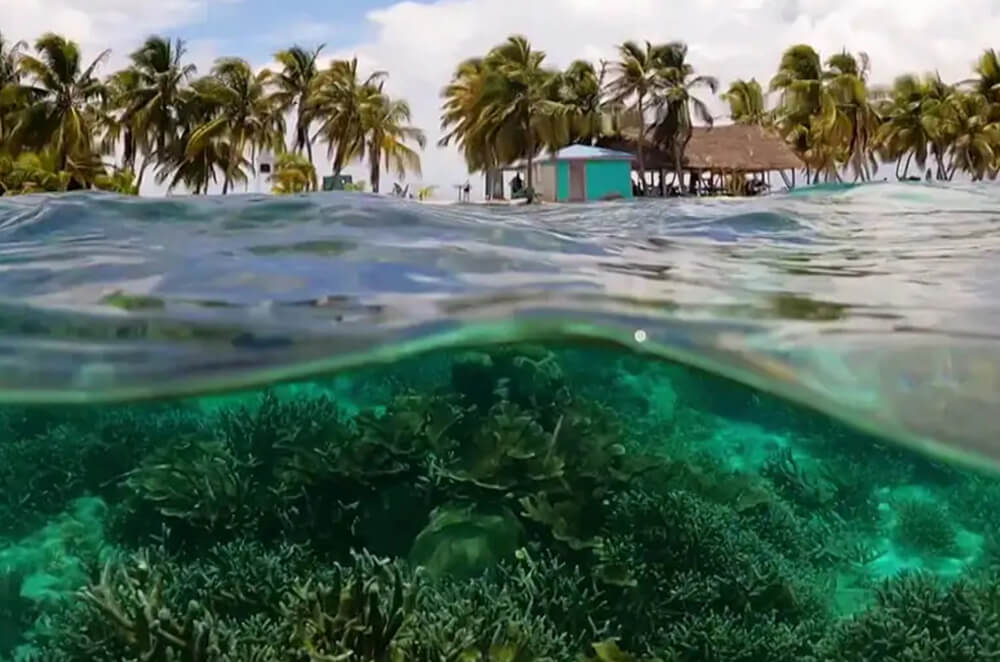
However, corals were the main victims of these heat waves with widespread bleaching and death in Florida, the Caribbean, Mexico, El Salvador, Costa Rica and Panama. "Bleaching is the first sign of a stress, but if this stress, continues, the result is death. And what we saw very sadly, at a generalized level, in a massive way, were hundreds of thousands of corals dying in a few days due to thermal stress," Lorenzo Alvarez, from the Academic Unit of Reef Systems of the Institute of Marine Sciences and Limnology of the National Autonomous University of Mexico in Puerto Morelos, reminds DW.
Coral bleaching has also reached Colombia, where the consequences of this event are unknown.
“Unfortunately we have no real data on the impact of bleaching at the national level due to lack of planning and resources,” laments Pizarro.
Likewise, according to the report, in South America, marine heat waves caused the Peruvian anchovies to move away from their usual waters, which led to the closure of commercial fishing in 2023 and 2024 and estimated losses of 1.4 billion dollars. Although subsidies were given to fishermen who could not carry out their activity, “this measure is short term, the only thing it does is to deepen this type of crisis,” criticizes Bello, who advocates reducing pressure on these resources and increasing the creation of marine protected areas.
“These are very important investments in a country that lives off fishing,” says the executive advisor for Ocean Public Policy of the organization Mission Blue, which is committed to the protection of specific ecosystems, including coral reefs and kelp forests, as preventive measures.
In addition to closing fisheries and issuing warnings, other responses that governments put in place to deal with the consequences of marine heat waves were the relocation of corals. "In Florida (United States) it worked very well to take corals that are in nurseries and move them to land-based coral nurseries. I wish we could do it as soon as possible in Latin America and the Caribbean, but the problem with having these coral centers on land is the costs," explains the Colombian scientist from the Perry Institute for Marine Science.
In addition to this measure, Alvarez recalled the placement of shading systems to avoid solar radiation as another solution to the heat stress experienced by these key ecosystems. “Corals generate barriers that provide us with important environmental services to humans such as coastal protection against hurricanes,” he reminded urging governments to prepare themselves to be able to react quickly to new marine heat waves in the future. “Latin American countries have to recognize that climate change is a real threat, that it is causing a lot of economic, human and biodiversity damage to nature, and the way to address these threats is by reducing greenhouse gas emissions and having much stricter environmental and biodiversity-friendly policies,” he concludes.
FUENTE: DW