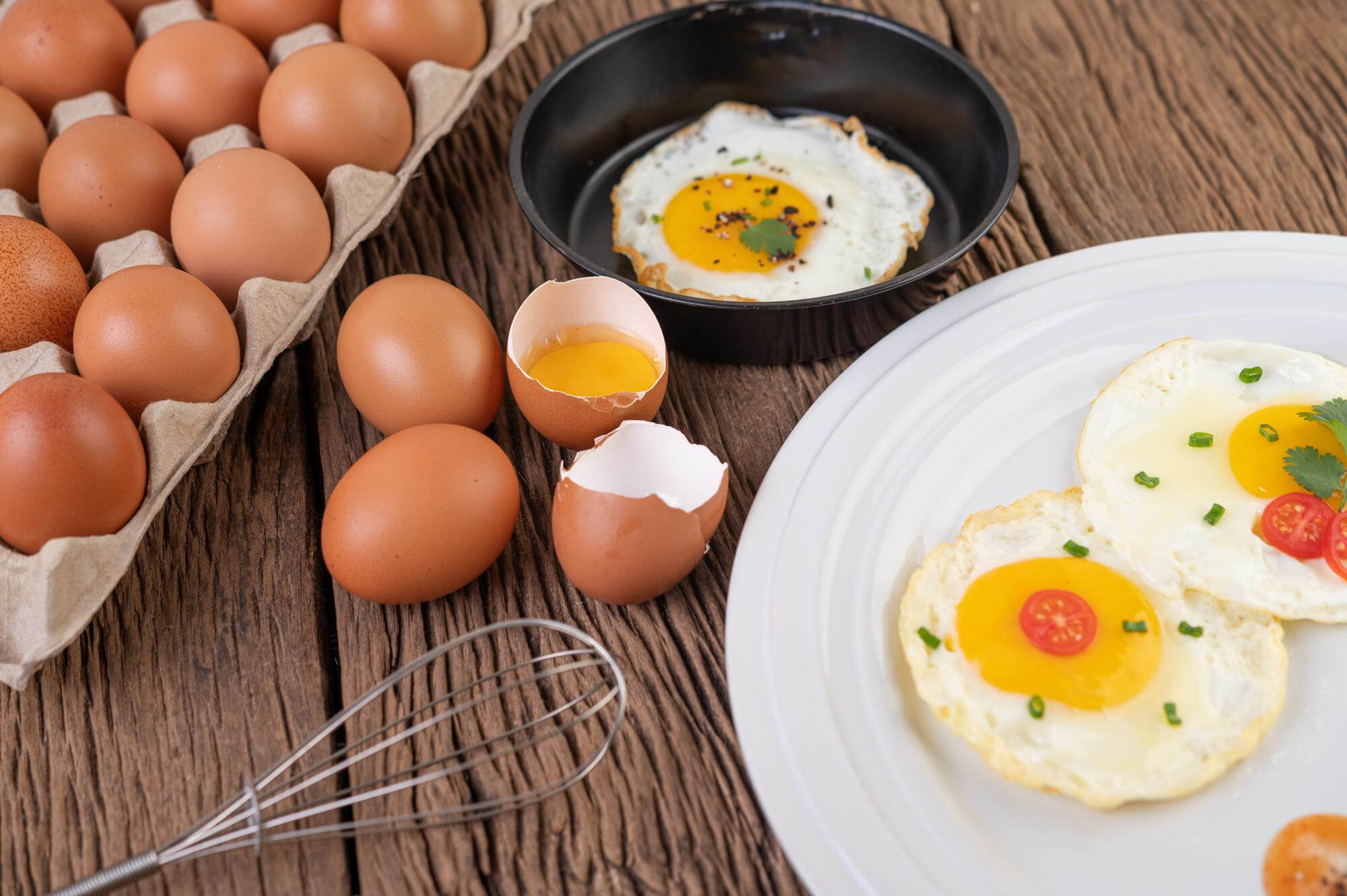
Eggs: Nutritional Value and Benefits
Fecha: 25/03/2026
There is no secret to eating eggs. But there is a secret to doing so safely. Tasty, affordable, and packed with excellent nutritional benefits, we will tell you everything you need to know about eggs: how to tell fresh eggs from old ones, how to handle them, how to store them, and how to eat them properly. And you can forget about many common misconceptions and myths.
Properties of Eggs
Eggs have all the nutrients necessary for the development of chicks, making them a highly nutritious food.
Both the egg white and the yolk have a substantial number of high-biological-value proteins. They are considered as such due to the quantity and balance of the amino acids they contain, to the extent that they serve as the benchmark in nutritional studies.
Benefits of Eating Eggs
The yolk is rich in high-quality fats: the combined content of monounsaturated and polyunsaturated fatty acids far exceeds that of saturated fat. In addition, it provides nutrients of great interest due to their beneficial health effects:
oleic acid, linoleic acid, omega-3, choline, vitamins, lutein, and zeaxanthin
This makes an egg a nutritional gem: to give you an idea, eggs are our primary source of choline, a compound necessary for various metabolic processes, and lutein and zeaxanthin are carotenoids with antioxidant properties that are believed to help prevent macular degeneration and coronary diseases such as stroke.
Types of Eggs and Nutritional Values
Eggs commonly sold in stores are classified by quality, weight, and size, although stores typically carry only Grade A eggs, which are the highest quality. Grade B eggs have some defects and are used exclusively in the food industry; they are not sold in stores.
By weight and size, we can find XL eggs, which weigh more than 73 grams; L-grade eggs, weighing between 63 and 73 grams; M-grade eggs, weighing between 53 and 63 grams; and P-grade eggs, weighing less than 53 grams.
Sometimes, the packaging of certain eggs bears the words “Extra” or “Extra Fresh,” showing that they are sold within 9 days of being laid.
Egg codes: 0, 1, 2, 3
Eggs bear a code showing the type of housing for the laying hens, ranging from 0 to 3:
- 0 for organic hens. Permanent access to the outdoors and organic food.
- 1 for free-range hens. Permanent access outdoors.
- 2 for barn-raised hens. The hens can move around inside a covered henhouse.
- 3 for caged hens. They are housed in cages to ease egg collection.
The next two letters show the country of origin of the egg, and the following digits show the specific farm with one number for the province, another for the municipality, and the rest for the farm within that municipality.
White or brown? The color does not matter
In Spain, both brown- and white-shelled eggs are sold, although brown eggs—from hens with reddish-brown plumage—are the most consumed. This is purely a matter of aesthetics, since the color of the shell has no effect on the taste, quality, or nutritional value. Despite the myths surrounding this, the only reason is commercial: white hens require Japanese sexing, a more expensive and complex selection technique.
The color of an eggshell is determined solely by the breed of the hen that laid it and the hen’s diet. For example, if the hen is fed corn that has food coloring, the eggshell will tend to be more yellow.
Eating Eggs: Nothing But Benefits
Eggs are a highly nutritious food. They have protein in both the white and the yolk. The white is rich in vitamins and provides between 10% and 20% of the recommended daily intake of vitamins A, D, E, and K. Eggs also have minerals such as phosphorus, selenium, iron, and zinc.
How many eggs can you eat per week?
In 1973, the American Heart Association recommended limiting weekly egg consumption to three due to their high cholesterol content (200 mg per egg), and health officials passed this advice on to the public. Numerous later studies, however, have disproved this notion.
Do eggs raise cholesterol?
Any food, when consumed in excess, can have a negative effect on a person’s health. Eggs should not be eaten in excessive amounts either. However, eating one egg a day does not increase the risk of cardiovascular disease, nor does it raise blood cholesterol levels in healthy people, contrary to some popular beliefs.
Is it worth buying organic eggs?
Organic eggs can cost more than €0.50 each, while free-range eggs cost around €0.30. Meanwhile, an egg from a hen raised her entire life in a barn can be found for as little as €0.10. In other words, the price differences between these categories can reach 500%. Is it worth it? Well, as expert José Luis Campo explains, there is no conclusive scientific evidence that systematically links a particular type of production to greater animal welfare or higher quality. This depends on good facilities, proper flock management, and adapting the types of hens to the chosen farming method.
In fact, the freshness of the product has a greater impact on its taste than any other factor, while its nutritional value is primarily determined by the birds’ diet: the fat and trace element (mineral) content can vary depending on the feed they receive, as can the composition of fatty acids and fat-soluble vitamins, particularly vitamin D3.
Is it bad to eat raw eggs?
All these benefits can become a risk if the food is handled improperly. That is why it must be handled with care. Heat treatment is particularly important, both from a nutritional and health perspective. Heating not only makes the proteins in the egg white easier to digest but also helps release vitamins and minerals and destroys any potentially harmful microorganisms.
In fact, it is not advisable to consume copious amounts of raw eggs. What is more, raw eggs have a substance called avidin, which can cause vitamin deficiency by blocking the absorption of biotin—a problem that has been seen in bodybuilders who consume substantial amounts of raw egg whites.
But heat is also recommended to prevent food poisoning, such as that caused by Salmonella bacteria. Heating the food to a temperature of 70 °C for at least a couple of minutes ensures that the bacteria are eliminated. Once cooked, however, it is best to refrigerate the food if it will not be eaten shortly thereafter and to reheat it to that temperature again.
What is “huevina” *?
It is the common name for pasteurized egg products. The heat treatment cuts bacteria, and its use is mandatory in the food service industry for recipes that do not reach 65°C.
10 Tips for Cooking and Using Eggs
- Eggs are so popular and widely consumed around the world that they might seem to hold no secrets. But that is not the case. Handling eggs requires caution, as does preparing them for consumption, whether as part of a dish or on their own—usually boiled or fried:
- Always buy eggs with intact, clean shells and a best-by date printed on the package.
- Do not wash them, not even before putting them in the refrigerator for storage. Water can allow germs to enter the egg. If they are very dirty, they can be washed just before cooking to avoid damaging the membrane that protects them from bacteria. In general, moisture and eggs do not mix well.
- Be careful when cracking the egg, as contaminants from the environment could get from the shell into the yolk. Do not crack the egg on the edge of the bowl where you will be beating it, and do not use the eggshell to separate the whites from the yolks.
- Cook foods that have eggs thoroughly, as heat kills bacteria such as salmonella.
- If the eggs do not stay intact and tend to break when boiled, add a little vinegar before the water comes to a boil.
- Let the tortillas set completely and keep them refrigerated if they will not be eaten right away.
- Prepare the mayonnaise under strictly hygienic conditions and store it in the refrigerator until ready to eat, but for no longer than 24 hours if made with fresh eggs.
- Store them in the refrigerator. Do not leave eggs or foods containing eggs unrefrigerated. Take them out of the refrigerator just before you are ready to use them.
- Keep eggs away from strong odors that might affect their taste.
- And of course, throw away any eggs that have an unusual smell or taste.
* Culinary & Legal (Spain): In Spain, huevina is a colloquial term for pasteurized egg products used in restaurants to prevent salmonella. In a professional kitchen setting, the English translation is "egg product" or "pasteurized egg"
SOURCE: Consumer and User Organization www.ocu.org (Spain)