Alliance for the Planet. From the Galapagos to Molpack®, the Engineering Behind Ecuador's Circular Economy
Fecha: 20/10/2025
Waste management has become one of the most pressing environmental challenges of the 21st century, prompting corporations and governments to seek innovative solutions. The size of the crisis is undeniable: it is estimated that more than 8 million tons of plastic waste ends up in the oceans every year, a figure that illustrates the scale of the problem. Experts have warned that if the current trend of consumption and disposal is not reversed, by 2050 there could be more plastic than fish in the sea in terms of weight.
Faced with such a critical situation, the industry's response cannot be fatalism, but rather action based on solutions. It is recognized that modern life requires the use of functional materials, so the goal is not the “utopia” of living without plastics and packaging, but rather the “possibilism” of managing their life cycle by bringing together the will of industry, citizens, and institutions. It is now that companies such as Molpack assume a leadership role.
Molpack's purpose is based on clear values of Integrity and Leadership, manifested in the constant exploration of non-traditional fibers to produce packaging with a lower environmental impact. The robust and aesthetic solutions offered by the company for the protection and transport of products extend to solving the post-consumer problem. The severity of global pollution justifies the urgency and necessity for Molpack to invest heavily in technology for recycling complex and multi-material fibers. The excessive cost associated with these technologies and collection coordination is only justified if the risk of environmental inaction is clearly perceived and the demand for solutions is constant. Therefore, Molpack's leadership is manifested not only in the search for internal solutions, but also in active collaboration with other industry players to promote sustainable development.
Ecuador and its Natural Treasure: The Priority of the Galápagos
Ecuador is home to a unique natural treasure in the Galapagos Islands, whose fragility and biodiversity make it a special priority in terms of global conservation. In this sensitive ecosystem, proper waste management is not simply a health measure, but a conservation imperative.
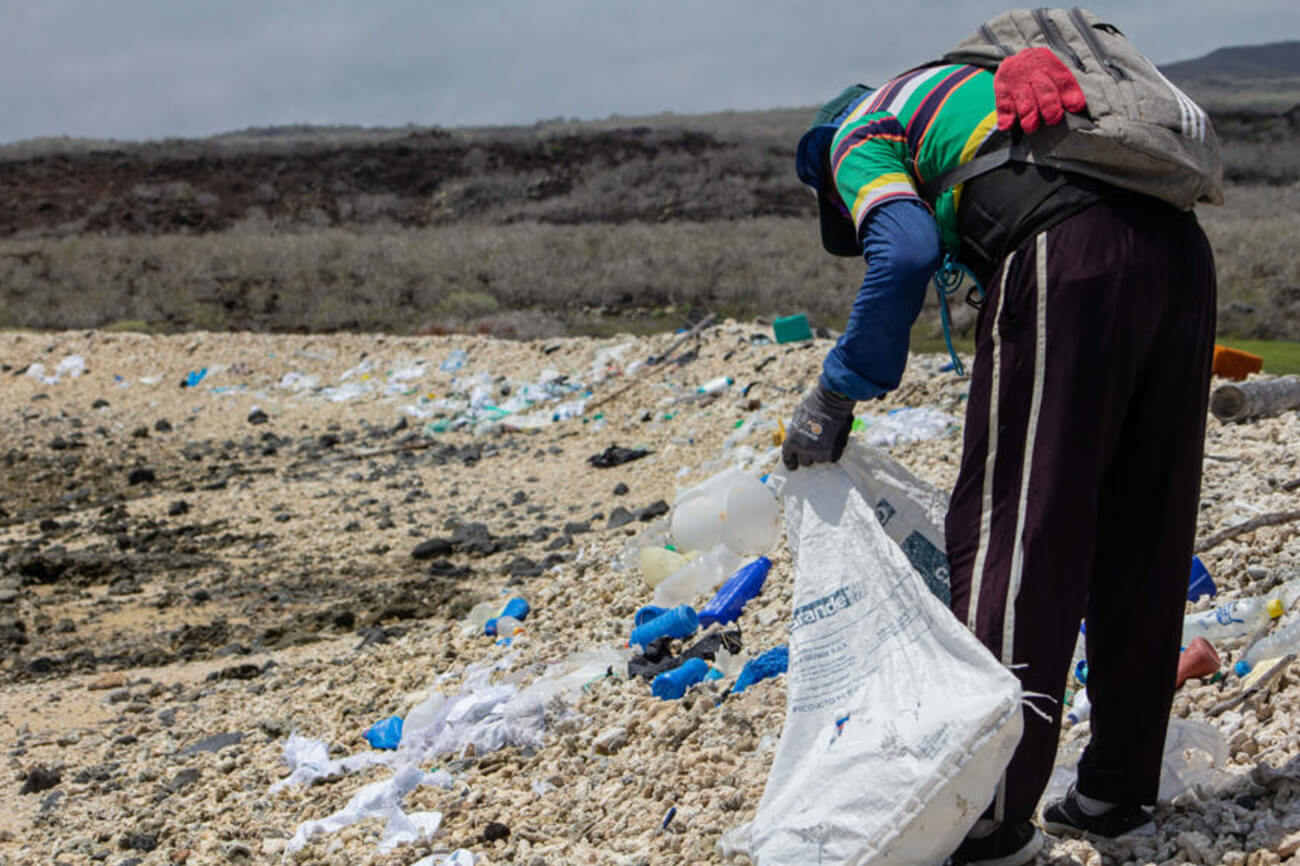
Due to the insular and vulnerable nature of the archipelago, the National Environmental Authority prioritizes the systematic evacuation of recyclable waste to the mainland for treatment. This practice is ongoing and necessary, with significant precedents; for example, in 2014, around fifty tons of waste were removed from the islands of Santa Cruz and San Cristóbal. The archipelago requires extraordinary conservation measures, which force industry to develop planning and recovery solutions that prove a higher-than-average commitment.
Strategic Convergence: Why Molpack® and TetraPak®
The collaboration between Molpack® Ecuador and TetraPak® Ecuador is not a mere commercial coincidence; it is a strategic convergence driven by environmental co-responsibility and the need to close complex material cycles. Tetra Pak, with its global focus on sustainability and circularity, requires industrial partners with the technological capacity to transform its post-consumer packaging into high-value raw materials.
Molpack presents itself as the industrial solution specializing in the recovery of cellulose fiber, the main part of cardboard packaging. The Galapagos case is becoming the litmus test for this alliance. It is not just a local recycling project, but a coordination and transformation mission that assesses the Ecuadorian industry's ability to manage waste under the most challenging logistical and environmental conditions.
Effective circularity requires the participation of all stakeholders. The cycle begins with citizens, who, in the Galápagos and on the mainland, handle separating waste. Residents are reminded of basic sorting rules, such as placing recyclable materials in the blue bag.
However, despite educational efforts and collection structures, there is still a significant gap in citizen participation. Official figures show that 83% of Ecuadorian households dispose of special or hazardous waste in regular trash. This reality, where the application of the circular economy by consumers is not fully proven, underscores the critical importance of the industry assuming formal responsibility for ensuring that materials return to the production cycle.
The Legal Imperative of REP: Structuring Sustainability
Extended Producer Responsibility (EPR) is not understood in Ecuador as an act of corporate philanthropy, but rather as a legal obligation and a fundamental principle of environmental management. The law clearly proves that producers or importers handle their product throughout its entire life cycle, including the impacts associated with material selection, the production process, use, and, crucially, final disposal.
For a global packaging supplier such as Tetra Pak, EPR involves active and continuous investment in the collection and recycling chain. This includes supporting infrastructure and investing in the recovery chain, such as the €569,000 invested in the region in 2020 to strengthen infrastructure.
Molpack, as a strategic enabler, plays an essential role in packaging manufacturers' compliance with EPR. Its industrial capacity enables producers to achieve their fiber recovery targets, which are key by-products of Tetra Pak's post-consumer programs. The existence and application of EPR in Ecuador is what generates stability and constant demand for recycled raw materials. This demand, guaranteed by the legal obligation of producers to recover their packaging, is what justifies the large investments that Molpack must make in advanced technologies to process non-traditional materials. EPR acts as the contract that ensures the constant flow of raw materials for Molpack's industrial recovery chain. In addition, EPR promotes collective leadership, requiring packaging manufacturers to partner with fiber experts (Molpack) and polyaluminum experts (such as Ecuaplastic or Morcas), confirming that the circular solution must be an effort of the entire production system.
The Core of the Alliance: From Multilayer Packaging to High-Value Raw Material
Cardboard packaging, designed to protect food and ensure its safety and isolation, is a complex material known as multilayer. It is composed of cardboard fiber (cellulose), polyethylene, and a thin layer of aluminum (polyaluminum or PolyAl).
The technological challenge lies in separating these components efficiently so that each can be reintroduced into its corresponding value chain. Achieving superior sorting of distinct types of plastic and multiple materials requires advanced technologies that Molpack and its partners have implemented to unlock the value of this waste, which has historically been difficult to recycle.
Molpack's Mastery: The Valorization of Fiber
Molpack specializes in the recovery and recycling of cellulose fiber, the part that accounts for of the total weight of a cardboard container.
The Galápagos project perfectly illustrates this ability. The fiber recovered from packaging transported from the islands was transformed by Molpack into high-demand products for the domestic industry, specifically egg cartons. This process is in line with Molpack's application in the poultry and agricultural sectors. By using post-consumer fiber to produce essential and recurring packaging such as egg trays, Molpack guarantees an upcycling process, creating a product of equal or greater value than the original. This valorization route ensures a continuous, high-volume market for the material, preventing it from ending up in landfills.
PolyAl (PolyAluminium) Loop Closure
The success of the circular economy is based on complementarity. While Molpack focuses on fiber, the cycle is closed thanks to the recovery of the remaining material: polyaluminum (PolyAl). Tetra Pak's partners in Ecuador, such as Ecuaplastic S.C. and Morcas, specialize in the transformation of this part.
A tangible example, linked to the packaging recovered from the Galapagos, is the use of the remaining polyaluminum to build dining rooms for recyclers. In general, PolyAl is transformed into high-quality, durable products such as construction panels and street furniture. The country's industrial capacity is remarkable: Ecuaplastic currently has a polyaluminum recycling capacity of 150 tons per month, with plans to double it to 300 tons. This increase in capacity is the clearest indicator that EPR and collection coordination are working effectively to supply the industry with the raw material it consumes.
The division of roles and technological specialization are summarized in the following table:
Table 1: The Material Recovery Cycle (Molpack and Partners)
|
Packaging Components |
Estimated Percentage |
Principal Valuation |
Final Product Example |
|
Cardboard Fiber (Pulp) |
Pulp recovery and molding |
Egg trays, Poultry/Agricultural Packaging |
|
|
PolyAluminum (PolyAl) |
Separation, Extrusion and Reprocessing |
Dining rooms for recyclers, street furniture, Panels |
Galápagos in Action: The Logistical Feat of 800,000 Containers
The recovery project in the Galapagos is a logistical and environmental milestone that shows the industry's deep commitment to preserving Ecuador's most sensitive ecosystem. In a collaboration that included support from the Decentralized Autonomous Government of Santa Cruz, 800,000 post-consumer Tetra Pak containers were recovered. This translates into more than 15 tons of waste that was removed from the archipelago.
This achievement not only stands for a direct reduction in the risk of marine pollution but also serves as a model of how coordination between public and private actors can generate measurable and remarkable results in large-scale waste management in remote areas.
The Journey of Circularity: Interregional Logistics
The complexity of the Galápagos project lies in interregional coordination. To ensure that the materials reached the recovery plants, the recovered waste was transported by sea in two containers to Guayaquil, and from there, the cardboard fiber was transported to Molpack's facilities in Quito, Ecuador. The Molpack plant in the Quito Industrial Park thus became the destination for processing fiber.
This logistical commitment to transport 15 tons of waste thousands of kilometers to ensure its comprehensive recovery is clear proof of leadership in sustainability. The success of maritime transport and material processing in Quito confirms that Ecuador's waste recovery chain has the capacity to run nationwide, even in the island provinces. For regulators, this ensures that companies can manage the total footprint of their products, even in the most costly and remote regions of the country. By mitigating environmental risks in critical areas, this project sets up a “beacon effect” that serves as a model for other countries facing similar challenges with vulnerable archipelagos.
The following table summarizes the key results of this circularity mission:
Table 2: Logistics and Key Results of the Galápagos Project
|
Impact Metrics |
Value |
Strategic Significance |
|
Recovered Packaging |
800,000 units |
Demonstration of large-scale harvesting capacity. |
|
Total Weight Evacuated |
Over 15 tons |
Direct reduction of the risk of marine pollution in a priority ecosystem. |
|
Critical Logistics |
Galapagos maritime transport Guayaquil/Quito |
Compliance with the principle of Extended Responsibility in remote areas. |
|
Fiber Destination |
Molpack Ecuador, Quito |
Transformation into a high-demand product (egg cartons). |
The Fundamental Link: Recognition for Grassroots Waste Pickers
Although attention tends to focus on industrial technology and complex logistics, it is essential to recognize that the beginning of the value chain lies in the work of grassroots recyclers. Without organized recyclers who collect and stockpile packaging, cellulose fiber would never reach the Molpack plant to be transformed. Industrial success begins at collection centers and on the streets.
The strategic alliance between Molpack and Tetra Pak looks to close the loop not only on materials, but also on social responsibility. Waste material is not only economically valuable but can also be transformed to dignify the work of those who collect it.
Dignity and Strengthening of the Supply Chain
The Galápagos project generated a direct social benefit by using recovered polyaluminum to build dining rooms for recyclers at the Fabricio Valverde collection center. This transformation of waste into functional infrastructure for the workers themselves is an act of social circularity.
This reciprocity strategy goes beyond simply paying for the material. By transforming their own waste material to improve the working conditions of their collection partners, Molpack and Tetra Pak generate deep loyalty and motivation, ensuring that the collection of their packaging will remain a priority in the future.
Investing in people is crucial. Actions such as this, together with Tetra Pak's regional investments in the collection chain (more than half a million euros in the region), not only ensure the flow of material, but also contribute to economic stability and improve the quality of life of recyclers. This project exemplifies how environmental action is intrinsically linked to social development in Ecuador, fulfilling the sustainability vision of protecting “Food, People, and Planet.”
The collaboration between Molpack del Ecuador and Tetra Pak Ecuador on the Galapagos project is a prime example of sustainability engineering. This partnership has demonstrated that complex waste management, particularly multi-layer packaging, and overcoming extreme logistical challenges (such as transportation from a vulnerable archipelago) are possible thanks to technological investment and strategic co-responsibility.
The Molpack-Tetra Pak model sets a standard for waste management in Latin America, proving that technological segregation—where Molpack recycles cellulose fiber and its polyaluminum allies—is the key to a comprehensive recycling system. Total transparency about the recovery chain (where the fiber goes, where the PolyAl goes) generates fundamental institutional trust, combating the risk of lack of traceability.
The Molpack-Tetra Pak model sets a standard for waste management in Latin America, proving that technological segregation—where Molpack recycles cellulose fiber and its polyaluminum allies—is the key to a comprehensive recycling system. Total transparency on the recovery chain (where the fiber goes, where the PolyAl goes) generates fundamental institutional trust, combating the risk of lack of traceability.
The Call to Action for Consumers
The industry's commitment, through robust partnerships and complex planning, solves the technical part of the cycle. However, the starting link, which drives the entire material flow, stays the citizen. The individual action of correctly separating waste is the energy that fuels circularity.
The audience is strongly urged to make waste separation a daily and essential practice. Consistently sorting recyclable materials into the blue bag ensures that fiber and polyaluminum reach collection centers and the Molpack plant in Quito for recovery.
El apoyo a esta economía circular se realiza a través de la conciencia ambiental y de las decisiones de compra. La invitación final es a ser parte activa de esta transformación, apoyando la cadena de valorización de materiales fibrosos:
#DontPollute #Recycle #BuyGuiltFreePulp
SOURCE: Gemini Deep Research